
Beyond Accommodation
The future of travel is not in a hotel room. Landscape-led design is reshaping hospitality destinations
Some of the most compelling moments in hospitality now happen beyond the main building.
A sauna at dusk. A cold plunge on the deck. A communal supper served in a woodland clearing. A cabin carefully positioned to frame the view. Increasingly, hospitality is shifting away from a single centralised destination model towards more immersive, landscape-led experiences with accommodation, wellness and social spaces carefully distributed across a rural site to create deeper connection to place.

For hospitality operators, this presents an opportunity to think differently about how destinations are designed, creating slower, more restorative guest journeys while allowing brands to expand in a flexible and lower-impact way.
You just have to look at the rapid acceleration of Soho House’s rural retreats to see how the model spells success. Since opening Soho Farmhouse in Oxfordshire in 2015, the new format - which combines cabins with wellness, leisure and social experiences across a countryside estate - has rapidly expanded both on site and with new rural destinations in Ibiza, upstate New York and Sonoma. Similarly, The Pig Hotels has built their offering around relaxed rural experiences rooted in landscape, hyper-local food and slower rhythms of living, while the forthcoming Nobu Hotel & Residences at Woolfox in Rutland sees the major global luxury brand shift from city skyscrapers to a countryside destination centred around wellbeing, outdoor leisure and connection to nature.
Together, these projects reflect a wider shift towards what many are calling ‘conscious luxury’ - hospitality experiences that prioritise restoration, immersion and authenticity over traditional ideas of formality or excess. Guests are increasingly seeking more meaningful escapes that combine design, wellness, food and landscape into a single cohesive experience.
At S+Co and Corr Cabins, we specialise in designing these kinds of immersive hospitality environments: combining architecture, interiors, branding and masterplanning to create experiences that feel deeply connected to both landscape and brand story.
Rooted in place
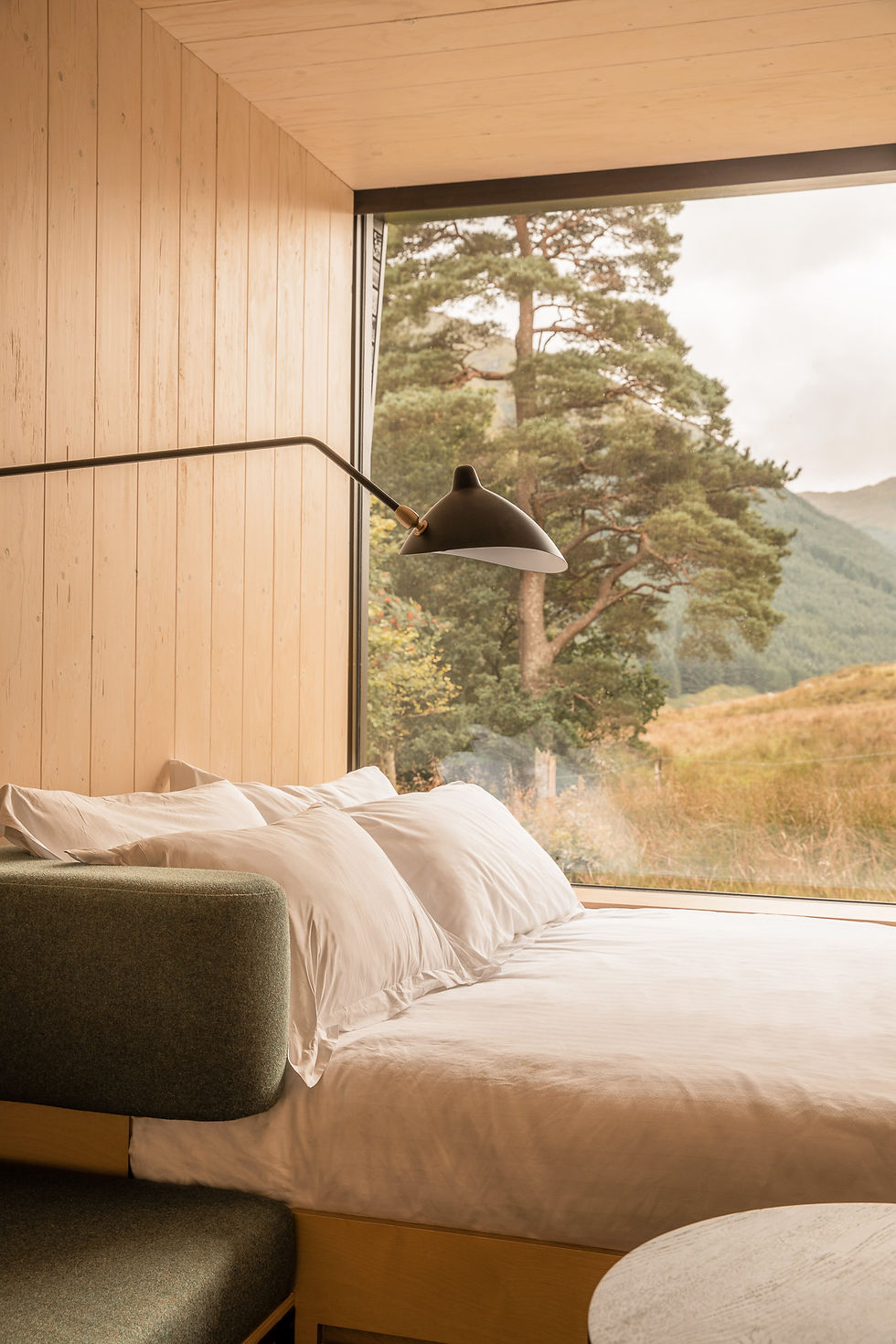
Founded five years ago by S+Co founder Adam Storey, Corr emerged from a desire to combine hospitality-led design thinking with a deep connection to landscape and outdoor living. With a background in hospitality branding, architecture and interiors, Adam saw an opportunity to create cabins that felt less like standalone structures and more like immersive hospitality experiences rooted in place.
“We’ve always approached cabins through the lens of hospitality,” he explains. “It’s not just about designing a beautiful object. It’s about creating an experience - how guests arrive, how the space makes them feel, how it connects them to the landscape and the wider brand story.”
This month marks five years since Corr’s first cabin opened at Monachyle Mhor in Perthshire. Known for its relaxed luxury, warmth and connection to the outdoors, Monachyle Mhor became the perfect setting to test the idea that a cabin could become more than additional accommodation - it could deepen the emotional experience of a destination itself. “The cabin had to feel connected to the experience Monachyle Mhor was already known for,” says Adam. “The atmosphere, the landscape, the sense of escape, it all had to feel cohesive.” That idea continues to shape every Corr project today.
Shaping immersive experiences
Unlike traditional hotel development, landscape-led accommodation allows hospitality operators to expand in a way that feels more immersive and emotionally engaging for guests. Cabins naturally encourage a slower pace and a closer relationship with the surrounding environment, whether that’s waking up to mountain views, stepping directly into nature, cold water swimming or evenings gathered around a firepit.
Importantly, wellness travellers also spend significantly more than the average tourist - around 41% more on domestic trips and 175% more internationally - making wellness-led experiences an increasingly valuable opportunity for hospitality operators.
Wellness is no longer confined to dedicated spa resorts. It’s becoming embedded within hospitality more broadly, influencing how guests want to travel, eat, stay and reconnect. Distilleries, vineyards, hotels and restaurants are all beginning to incorporate slower, more restorative experiences into their wider offer.
“Wellness today is less about adding a spa treatment menu and more about creating environments that genuinely help people slow down and reconnect,” Adam explains. “Landscape becomes part of the experience itself.”
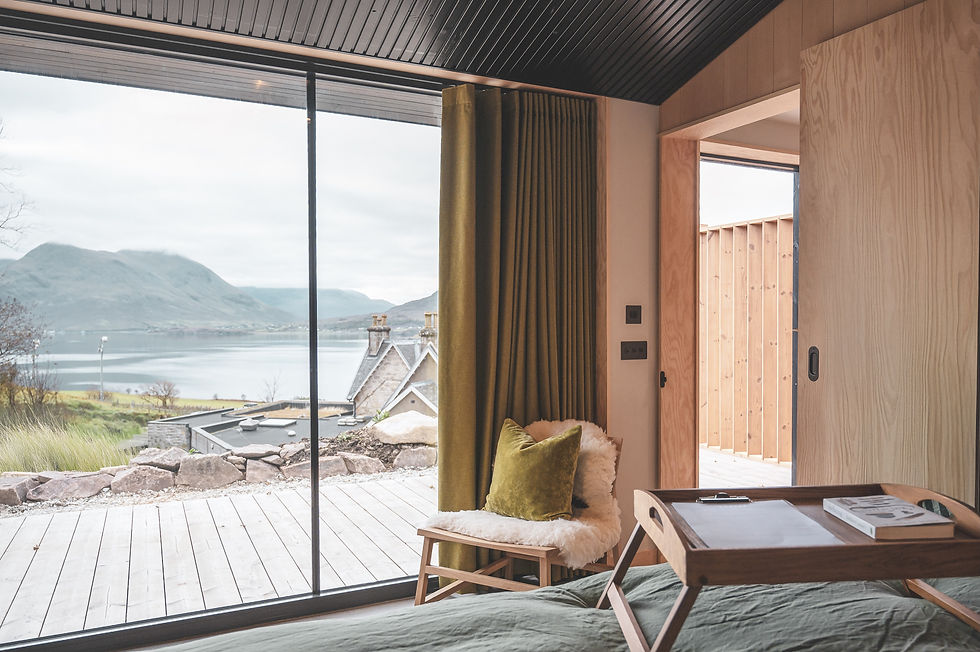
At Isle of Raasay Distillery, bespoke guest cabins, private sauna cabins and communal gathering spaces were designed to become an extension of the distillery experience itself.
This thinking has led Corr and S+Co to work increasingly with hospitality operators looking to create immersive destination experiences. One example is Corr’s collaboration with Isle of Raasay Distillery, where bespoke guest cabins, private sauna cabins and communal gathering spaces were designed to become an extension of the distillery experience itself.
The project reflects the distillery’s values of craftsmanship, sustainability and connection to place. Positioned carefully across the sloping site to maximise outlook and privacy, the cabins frame expansive views across to Skye’s Cuillin mountains while creating moments of stillness and retreat within the landscape.
Warm timber interiors, natural textures and subtle references to the distillery’s whisky heritage create a sense of calm and authenticity. While sauna experiences, cold plunge pools and immersion in the island landscape deepen the restorative quality of the stay while extending the visitor journey beyond the distillery building itself.
The result is more than accommodation. It’s a hospitality experience shaped around landscape, atmosphere and emotional connection - one that helped the distillery win the World’s Best Visitor Attraction at the World Whiskies Award 2026.

In harmony with the land
A similar approach informed Corr’s work at Château Puynard in Bordeaux, where cabins were carefully integrated amongst the vineyards to create immersive stays connected to the rhythms of the estate itself. Meanwhile, at Dunsinnan Estate in Perthshire, what began as a single cabin immersed within the working farm has evolved into a much wider hospitality masterplan. The vision now includes a collection of unique cabins alongside loch watersports, outdoor leisure facilities and communal gathering spaces - all designed to respond to the growing number of visitors drawn to the area for walking, fishing and outdoor pursuits.
Rather than creating a single destination building, the ambition is to weave hospitality more thoughtfully through the landscape itself.
For operators, this approach also creates flexibility. Cabins and wellness spaces can often be introduced incrementally across a site, allowing brands to expand their offer without losing the intimacy, atmosphere or connection to landscape that guests increasingly value.
Destinations designed to connect
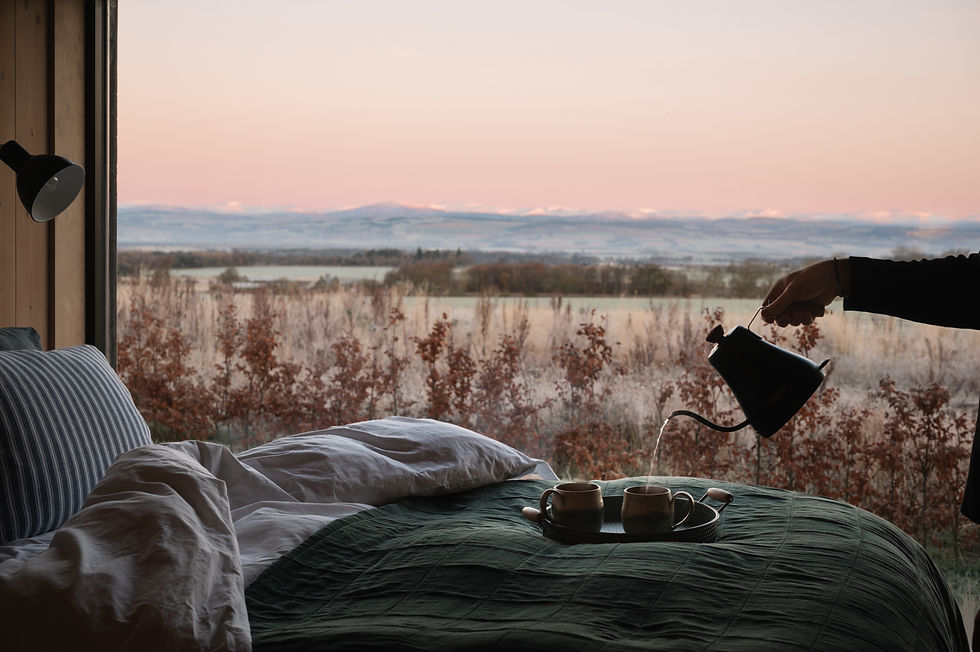
“We’re seeing more operators thinking beyond simply adding rooms,” says Adam. “They’re asking how accommodation can strengthen their identity as a destination and create experiences guests actively seek out and remember.”
Whether for a distillery, hotel, vineyard or wellness retreat, landscape-led accommodation offers hospitality brands an opportunity to create experiences that feel more immersive, emotionally resonant and connected to place.
The future of hospitality is no longer confined to four walls. It’s immersive, restorative and deeply connected to place.
If you're a hospitality operator seeking to grow your offering , get in touch to discuss how Corr could help you build an experience that connects — drop us a line on hello@corrcabins.com to find out more.

